Kunst im öffentlichen Raum – 8. internationale Waldkunst Biennale Darmstadt / Deutschland
Material: Vektorgrafiken, CDA Prins, Eisenbleche, Drehgelenke, Eisen Stative
Hintergrund:
Das Darmstädter Geistesleben des 18. Jh. brachte im Gefolge des Hypes um Goethes „Die Leiden des jungen Werther“ den “Kreis der Empfindsamen” hervor: einen Zirkel von schöngeistigen und empfindsamen jungen Mädchen, gefördert durch Goethes Freund Johann Heinrich Merck.
Von diesen Begegnungen im Odenwald zeugen viele gefühlvolle Freundschaften Briefe und Gedichte.
Ausgangspunkt der Installation war die Mercksche Sammlung von Silhouetten, damals beliebte Schattenrisse bedeutender Personen. Man kann sie als Vorläufer binärer Bilder betrachten, da sie ein binäres System (Schwarz/Weiß) benutzen, und “überflüssige“ Information zugunsten eines idealtypischen Ausdrucks eliminieren. Zudem wurden Silhouetten als Codes in der Kommunikation benutzt: sie ermöglichten verklausulierte Botschaften zwischen den Beteiligten.
Installation:
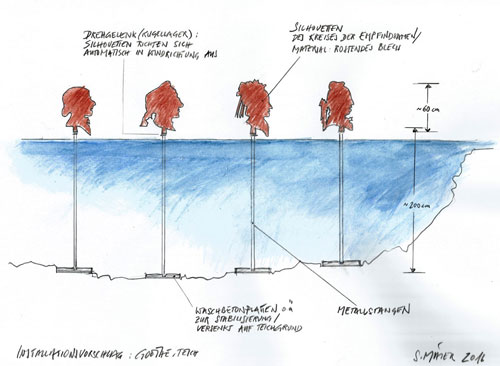
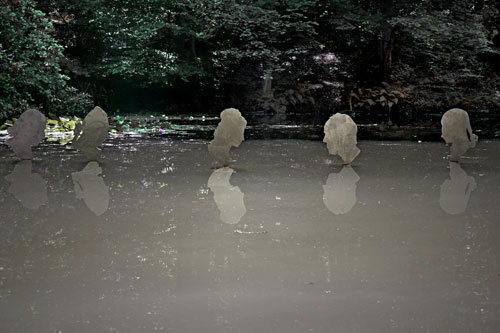
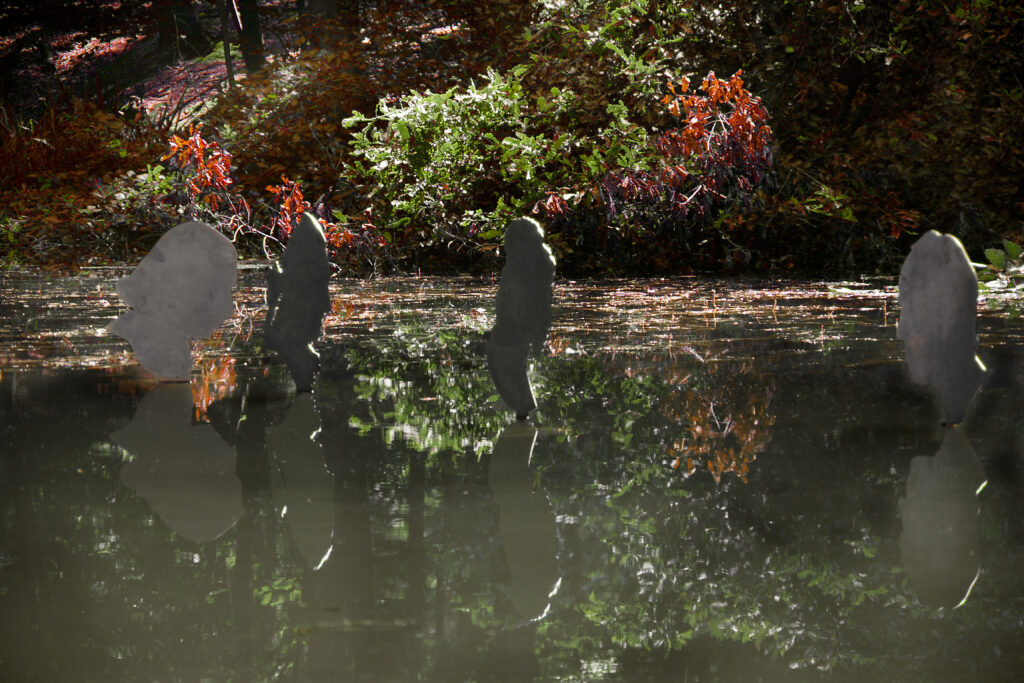
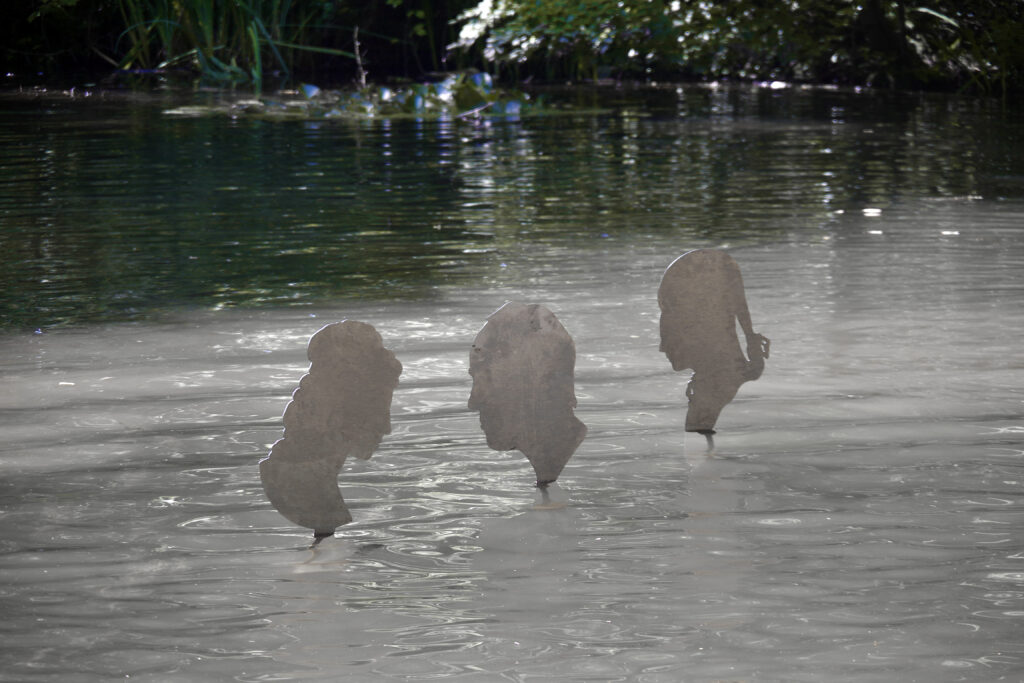
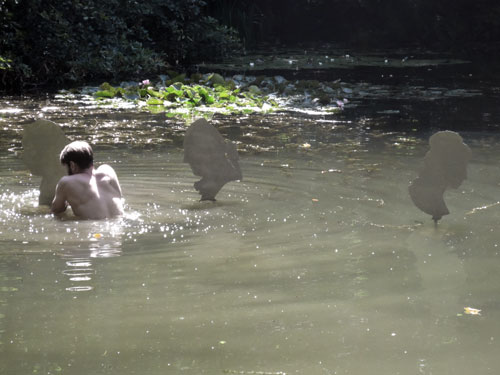
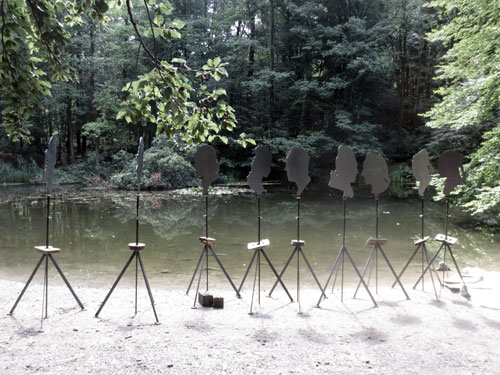
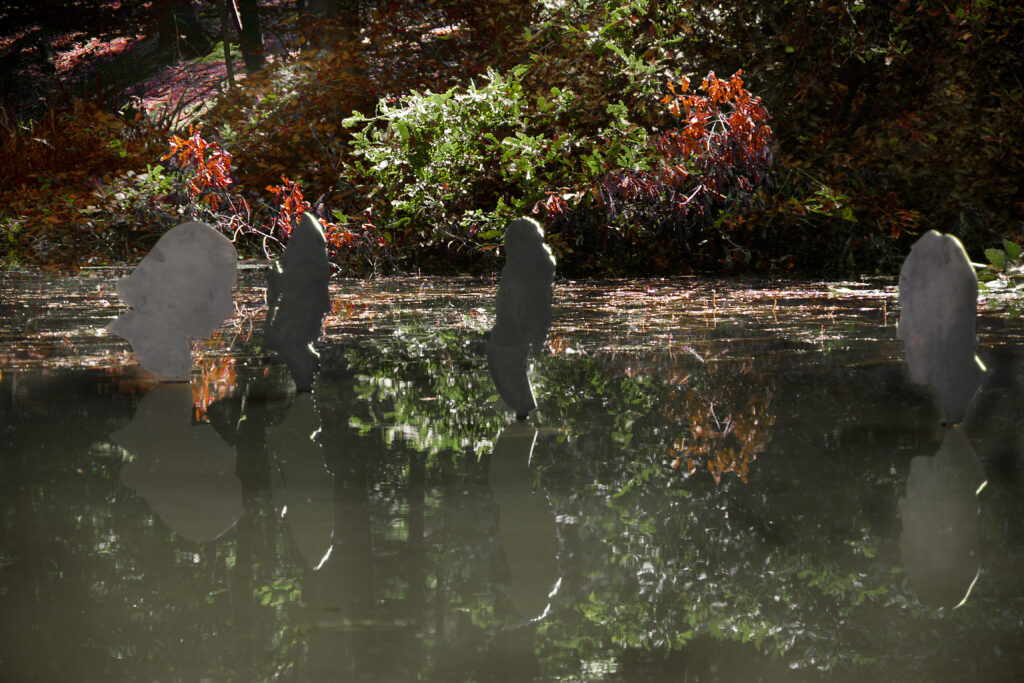
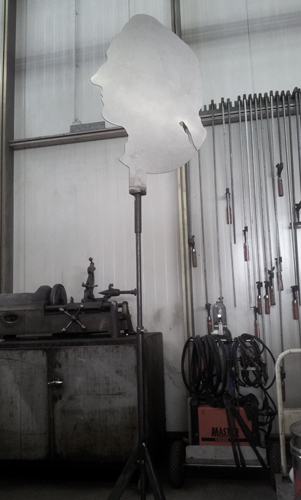
Für die Installation wurden neun historische Silhouetten in Vektorgrafiken umgewandelt und mittels eines CAD–Verfahrens aus Eisenblechen geschnitten. Diese, mit einem Drehgelenk auf Stangen montiert, sind im Goetheteich verankert und scheinen knapp über der Wasseroberfläche zu schweben. Die allmählich rostenden Köpfe bewegen sich, wenden sich in verschiedenen Konstellationen einander zu oder ab. So entscheidet der Wind, wer mit wem kommuniziert.
Installation period: August 2016 – August 2018 Goetheteich Darmstadt / Deutschland
Im Schatten der Empfindsamen
Art in Public Space – 8th International Forest Art Biennale Darmstadt / Germany
Material: vector graphics, CDA Prins, iron sheets, swivel joints, iron tripods
Background:
In the wake of the hype surrounding Goethe’s “The Sorrows of Young Werther”, 18th century intellectual life in Darmstadt produced the “Circle of the Sensitive”: a circle of beautiful and sensitive young girls, encouraged by Goethe’s friend Johann Heinrich Merck.
Many sensitive friendships, letters and poems bear witness to these encounters in the Odenwald.
The starting point for the installation was Merck’s collection of silhouettes, then popular silhouettes of important people. They can be seen as precursors of binary images, as they use a binary system (black and white), eliminating “superfluous” information in favour of an ideal-typical expression. Moreover, silhouettes were used as codes in communication: they allowed for encoded messages between participants.
Installation:
For the installation, nine historical silhouettes were converted into vector graphics and cut from iron sheets using a CAD process. These, mounted on poles with a swivel joint, are anchored in the Goethe Pond and seem to float just above the water surface. The gradually rusting heads move, turning towards or away from each other in various constellations. In this way, the wind decides who communicates with whom.
Installation period: August 2016 – August 2018 Goetheteich Darmstadt / Germany